
Glass vs Cloth Mousepad: The Real Differences
August 12, 2026
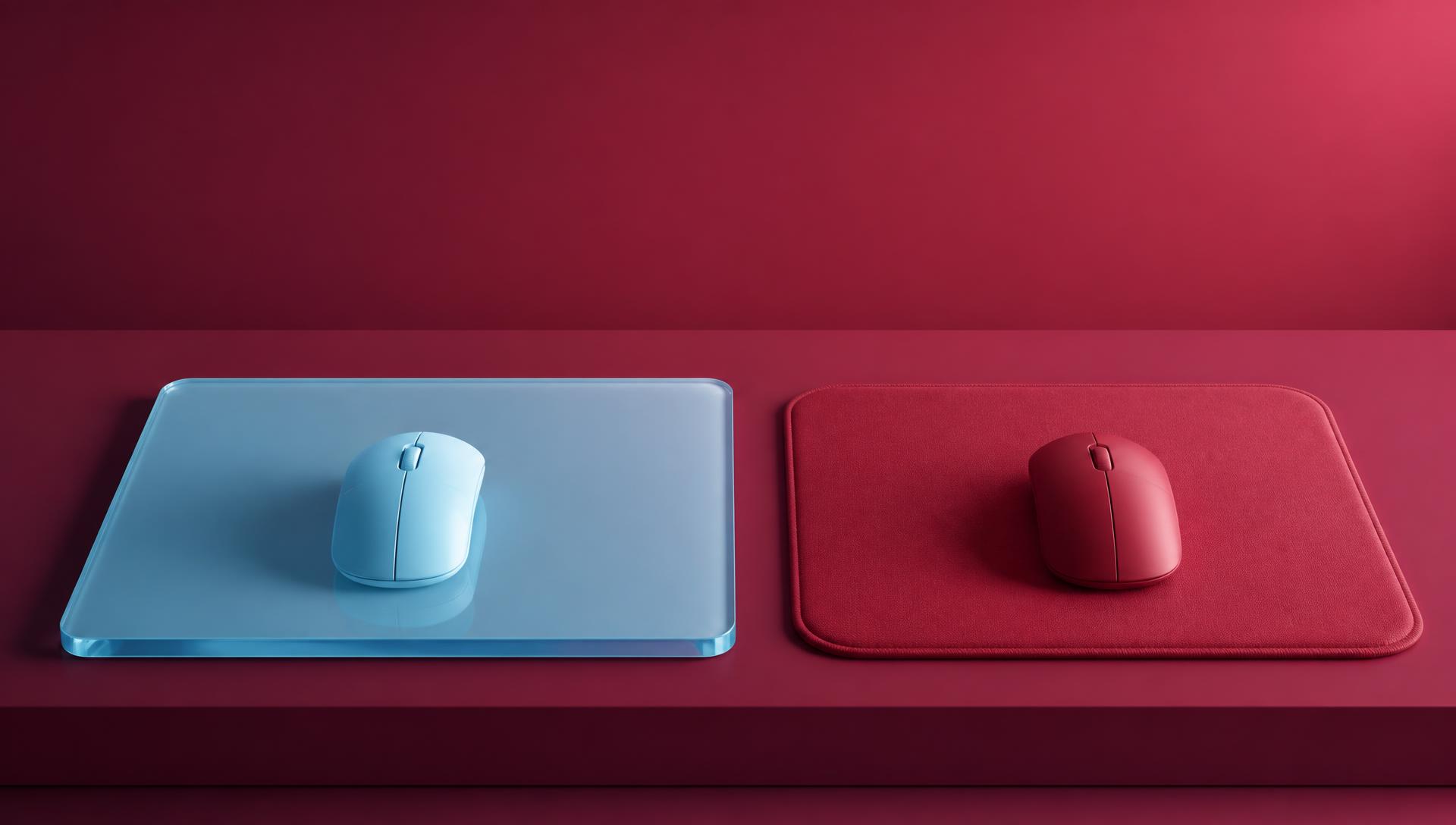
Glass mousepads and cloth mousepads solve different problems. Glass gives you a hard, perfectly flat, near-zero-friction surface with fast glide and no wear from mouse feet; cloth gives you texture-tuned friction, quieter operation, forgiving stopping power, and a surface that can carry a full-bleed print. Neither is objectively "better" — the right pick depends on your sensitivity, grip style, and how much you care about sound and print quality.
If you searched "glass mousepad vs cloth mousepad" because you're deciding between a hard glass pad and a printed cloth deskmat, the short version is: glass suits low-sensitivity flick players who want consistent, fast glide and don't mind the noise and skate wear; cloth suits everyone who wants control, quiet, comfort, and a design that actually looks like something.
What "glass" actually means
Glass gaming mousepads are typically tempered glass with a printed or coated underside, sometimes with a thin anti-glare or matte finish on top. The surface itself doesn't flex, doesn't compress, and doesn't have a woven texture — it's a smooth, hard plane. That's the whole appeal: consistency. Every square centimeter of a glass pad behaves identically because there's no weave, no nap, no seam.
Cloth pads are woven textile — usually a polyester or poly-blend surface bonded to a rubber base — with a printed dye-sublimated top layer. The weave density and finish (smooth "speed" weaves vs coarser "control" weaves) determine friction, and the rubber base determines how much the whole pad grips the desk.
Glide speed and stopping power
This is the core tradeoff and it's a real mechanical one, not marketing.
Glass has extremely low coefficient of friction. A mouse gets moving fast with very little input force, and it keeps moving with very little resistance — that's "glide." The tradeoff is stopping power: because there's so little friction, decelerating the mouse precisely at the end of a flick relies almost entirely on your hand's micro-muscle control rather than the pad helping you stop. Overshoot is more common on glass, especially for players with heavier hands or wrist-based aim.
Cloth surfaces introduce controlled friction through the weave. A tighter, smoother weave gets you closer to glass-like glide with more forgiving stopping behavior; a coarser weave slows the mouse down more per centimeter of travel and rewards players who make small, frequent corrections rather than big flicks. Because you can choose surface texture within a cloth pad's construction, cloth as a category has a wider tunable range than glass, which is fundamentally one texture: smooth and hard.
Sensor tracking on reflective surfaces
Optical and laser sensors track by reading contrast in the surface texture beneath the mouse thousands of times per second. A perfectly smooth, semi-reflective glass surface gives the sensor very little texture to lock onto compared to a printed cloth weave, which is why glass pads are finished with matte etching, frosting, or anti-glare coatings rather than being left as bare polished glass — bare glass would cause tracking inconsistency or acceleration artifacts on many sensors. Cloth's woven texture is naturally sensor-friendly; it's essentially the texture sensors were tuned against for two decades. This is a real, physical reason cloth remains the default surface for competitive tracking reliability, not just habit.
Noise
Glass pads are audibly loud. The hard surface transmits the click-clack of mouse feet directly, and there's no material to absorb the impact of mouse-button clicks resting on the pad or a keyboard's typing vibration nearby. Cloth absorbs and dampens that noise because the weave and the foam/rubber base flex slightly under contact. If you're in a shared room, on a mic, or just sensitive to desk noise, cloth is the quieter category by a wide margin.
Mouse-skate wear rate
This is one of glass's biggest hidden costs. PTFE and UHMW-PE mouse feet wear down through abrasive contact, and a hard, unforgiving glass surface accelerates that wear compared to a woven cloth surface that has some give. Players who use glass pads report needing to replace skates meaningfully more often — see our breakdown in mouse skates and glide explained for how skate material interacts with different pad surfaces. Cloth is gentler on skates because the weave doesn't grind against the feet the same way a rigid plane does.
Hand sweat behavior
Glass doesn't absorb moisture — sweat sits on top of it, which can actually increase stiction unpredictably as a thin film builds up, and it needs wiping mid-session in humid conditions or long play sessions. Cloth's surface can wick a small amount of surface moisture into the weave, which some players find keeps friction more consistent over a session, though heavy sweat will eventually saturate cloth and change its feel too. Neither is sweat-proof, but glass shows the effect faster and more visibly (streaking, smearing) than cloth.
Durability and cleaning
Glass is scratch-resistant in the sense that it won't fray or fuzz the way cloth can, but it's genuinely fragile — a cracked or chipped glass pad is a full replacement, not a repair. Cloth degrades differently: the surface can pill, the print can fade under years of UV and abrasion, and edges can fray if unstitched (see stitched vs unstitched edges), but it doesn't shatter and it tolerates being rolled, washed, and generally handled roughly.
Cleaning glass is trivial — glass cleaner and a cloth, done. Cleaning a cloth pad takes more care to avoid damaging the print or the rubber base; see our full cleaning guide for the safe method.
Cost over time
Glass pads are usually a higher single upfront cost and, because they don't wear out the surface, that's effectively their lifetime cost — barring breakage. Cloth pads cost less upfront but the printed surface will show wear over a multi-year span, and the real ongoing cost driver isn't the pad itself but skate replacement frequency, which glass makes worse. Factor skate costs into a genuine cost-over-time comparison rather than just the pad price.
Comparison table
| Factor | Glass | Cloth |
|---|---|---|
| Glide speed | Very fast, low friction | Tunable, weave-dependent |
| Stopping power | Low — relies on hand control | Higher, more forgiving |
| Sensor tracking | Needs matte/etched finish to track well | Naturally sensor-friendly texture |
| Noise | Loud, hard-surface clatter | Dampened, quiet |
| Skate wear rate | Faster wear on hard surface | Slower, gentler wear |
| Sweat handling | Sits on top, streaks visibly | Wicks lightly, saturates slowly |
| Durability | Fragile — can crack/chip | Wears gradually, doesn't shatter |
| Print/design capability | Limited, usually under-glass graphic | Full-bleed dye-sublimation art |
| Typical cost pattern | Higher upfront, low ongoing (if unbroken) | Lower upfront, gradual wear |
Who each surface actually suits
Choose glass if you're a low-sensitivity flick-heavy player, you value raw glide speed above all else, and you don't mind the noise or the skate wear cost. Choose cloth if you want tunable friction, quiet operation, better native sensor tracking, a design you actually chose, and a pad that survives years of daily use without being one drop away from cracked. For anyone building a setup around a custom design — anime, gaming art, a logo — cloth is the only category that supports it: glass pads can't carry a full dye-sublimated print the way a custom deskmat can.
FAQ
Are glass mousepads good for gaming?
They're good for a specific style: low-sensitivity, flick-based aim where raw glide speed matters most. They're less good for sensor tracking consistency, noise, and skate longevity compared to cloth.
Is a glass pad better for aim than cloth?
Not universally. Glass gives faster glide but less stopping power, so it can actually hurt aim consistency for players who rely on frequent micro-corrections rather than big flicks. See does your mousepad affect your aim for the full mechanism.
What are the downsides of glass mousepads?
Fragility (cracking/chipping), loud clatter, faster mouse-skate wear, visible sweat streaking, and no ability to carry a full custom print the way cloth can.
Do glass mousepads mess up mouse sensors?
Bare polished glass can cause tracking inconsistency because sensors read surface texture for contrast. That's why glass pads use matte, etched, or frosted finishes rather than raw glass.
Is cloth or hard mousepad better for control?
Cloth generally wins for control because weave density is tunable and provides more natural stopping power, while hard surfaces like glass prioritize speed over control.
Do cloth mousepads wear out mouse skates faster than glass?
No — it's the opposite. Hard glass surfaces tend to abrade PTFE and UHMW-PE skates faster than a woven cloth surface with slight give.
Can you get a custom design on a glass mousepad?
Not in the way cloth allows. Cloth's dye-sublimation process supports full-bleed, edge-to-edge printed artwork; glass pads are limited to under-glass graphics that can't match that fidelity or color range.
Ready to see the difference for yourself? Head into the studio and build a cloth deskmat around your own design — pick your size, dial in the surface, and check pricing before you commit.
Keep going
Like this? Get the next one in your inbox.
New journal posts, prompt packs, and artist drops. No spam, ever.