
Best Mousepad for Competitive FPS: Size & Surface
January 26, 2026
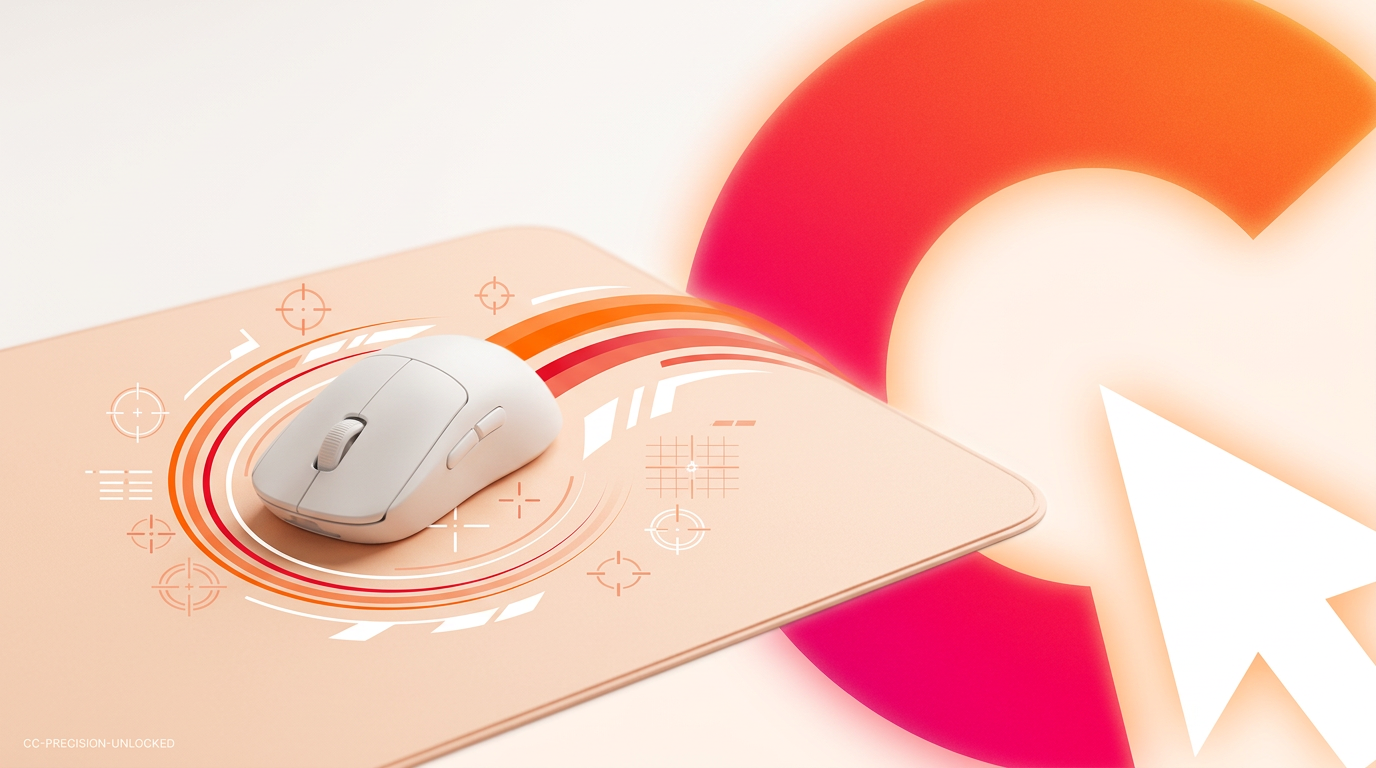
The best mousepad for competitive FPS is a hybrid or control-leaning cloth surface, sized wide enough for a full 360-degree turn at your sensitivity, at roughly 4mm thick with stitched edges. Every part of that spec exists to solve a specific problem — overshoot, running out of pad, desk feel, or fraying edges — and this guide walks through each one.
Arm aiming vs wrist aiming
How you aim changes what "enough pad" means.
Wrist aiming uses a small range of motion centered on the wrist joint. It needs less raw pad width but rewards a very consistent, low-friction-variance surface, since small motions are easy to throw off with inconsistent texture.
Arm aiming moves the whole forearm across the desk and covers much more distance per turn. It needs real horizontal pad width — running out of surface mid-flick means lifting and repositioning, which costs the duel. Most low-sensitivity competitive players use arm aim specifically because it produces more consistent, repeatable large movements than wrist aim does at the same sensitivity.
Neither style is "better" for FPS specifically — but arm aiming is far more sensitive to pad size, which is why size gets its own section below.
cm/360° and the pad width you actually need
cm/360° is how many centimeters of mouse movement produce one full 360-degree turn in-game. It's the number that actually determines pad width, not "how big is the biggest pad available."
| Sensitivity style | Approx. cm/360° | Minimum pad width | Recommended pad width |
|---|---|---|---|
| Very low sens (pro-style tactical) | ~45-50cm | ~55-60cm | ~70-75cm |
| Low sens (common competitive) | ~30cm | ~40cm | ~55cm |
| Medium-low sens | ~20cm | ~30cm | ~40cm |
| Medium sens | ~10cm | ~20cm | ~25cm |
The formula behind this, covered in full in our low-DPI mousepad size guide: minimum width equals your cm/360° plus about 10cm of headroom, and recommended width scales that up by roughly 1.5x so you're not aiming at the literal edge of the pad on every turn. Translated into CursorCulture sizes, most competitive low-sensitivity setups are comfortable on an XXL (900×400mm), and only extreme low-sensitivity setups need the extra width of an XXXL (1200×600mm).
Surface speed and stopping power
FPS games split roughly into two demands:
- Tap-fire, micro-correction games (tactical shooters where duels are won by precise crosshair placement, not wide swings) reward a control or hybrid surface with strong stopping power. Glide-past on a fast surface turns a headshot into a body shot.
- Wide-flick, tracking-heavy games reward a speed-leaning hybrid or dedicated speed surface, since friction just slows down movements that need to cover a lot of ground fast.
Most competitive FPS titles, including tactical shooters, sit closer to the first category, which is why hybrid control is the common recommendation rather than a pure speed surface. Our Valorant mousepad guide covers this exact reasoning in detail for a tap-fire-style game, and the same logic transfers to most round-based tactical shooters.
Thickness and desk feel
Thickness doesn't change glide or friction — that comes from the weave. What it changes is desk isolation, wrist comfort, and sensor stability during a fast swipe. Our mousepad thickness guide breaks this down fully, but for competitive FPS specifically:
- 2-3mm transmits desk imperfections directly into your aim, which shows up as inconsistent friction you can't easily diagnose.
- 4mm is the common sweet spot — enough desk isolation to smooth out minor imperfections without introducing the uneven compression that very thick pads create under a moving mouse.
- 5mm+ can shift your sensor's effective lift-off height slightly during a fast swipe as the padding compresses unevenly, which is a real, if small, tracking inconsistency in a game decided by sub-pixel corrections.
Edge stitching and durability under repeated use
Competitive practice means hours of repeated mouse contact near the pad's borders, plus the occasional wide swing that clips the edge outright. Unstitched edges fray with that kind of contact, and once the weave starts unraveling at an edge it spreads inward toward the play area. Stitched edges lock the weave down and hold up to that repeated contact far longer — see why stitched edges matter for the full mechanics.
Consistency under sweat and long sessions
Long competitive sessions mean sustained contact between your palm and the pad surface, and that means moisture. A few things matter here:
- A dye-sublimated print, where dye is bonded into the fiber rather than sitting on top of it, holds up to repeated moisture contact better than surface-level ink, which can degrade or feel tacky over time.
- A textured rubber base keeps the pad anchored to the desk even as your palm heel applies sideways pressure during aggressive movements — a pad that creeps mid-session introduces exactly the kind of inconsistency that ruins muscle memory.
- Regular cleaning removes the skin oil buildup that changes surface feel over time; see our full cleaning guide for the hand-wash method that won't damage the print or base.
Putting the spec together
| Factor | Competitive FPS recommendation |
|---|---|
| Surface | Hybrid control (control-leaning for tap-fire games) |
| Size | XXL for most sensitivities; XXXL only for very low sens/arm aim |
| Thickness | 4mm |
| Edges | Stitched |
| Base | Textured rubber |
| Care | Hand wash only, no heat, no folding |
Related reading
- Does Your Mousepad Affect Your Aim? The Honest Answer
- Mouse Skates and Glide Explained: PTFE vs UHMW-PE
- Glass vs Cloth Mousepad: The Real Differences
FAQ
What's the best mousepad for competitive FPS?
A hybrid or control-leaning cloth surface at roughly 4mm thick, stitched edges, sized wide enough for a full 360-degree turn at your sensitivity. The specific surface tuning shifts slightly toward pure control for tap-fire games and toward speed for wide-flick, tracking-heavy titles.
What mousepad size do I need for FPS gaming?
It depends on your cm/360° — how much mouse movement produces a full turn. Most competitive low-sensitivity setups are comfortable on an XXL (900×400mm) pad, with XXXL reserved for very low sensitivity or arm-aiming setups that need extra width.
What's the best mousepad for low DPI gaming?
Size matters more than surface at low DPI, since you need enough horizontal travel to complete a full turn without running off the pad. See our dedicated low-DPI sizing guide for the exact math behind matching pad width to your sensitivity.
What thickness is best for FPS mousepads?
4mm is the common sweet spot for competitive use — enough to absorb minor desk imperfections without the uneven compression that thicker pads can introduce under a fast-moving mouse. Thinner pads transmit desk flaws directly into your aim.
Should I use a control or speed mousepad for FPS?
Most competitive FPS titles, especially tap-fire tactical shooters, favor control or hybrid surfaces because precise stopping matters more than raw glide speed. Speed surfaces suit games built around wide, fast flicks and constant tracking rather than static crosshair placement.
Do stitched edges matter for competitive play?
Yes — hours of repeated contact and occasional edge clips during wide swings will fray an unstitched edge over time, and that fraying spreads into the play area. Stitched edges hold the weave in place and last significantly longer under competitive use.
How does sweat affect a competitive mousepad over time?
Sustained palm contact introduces moisture and skin oil that change surface feel if left uncleaned. A dye-sublimated print and textured rubber base hold up better to this than surface-level ink or a smooth base, and regular hand washing keeps the surface feel consistent.
If you've settled on a size and surface, you can build the actual design in the AI studio and check exact dimensions and pricing on the pricing page before ordering.
Keep going
Like this? Get the next one in your inbox.
New journal posts, prompt packs, and artist drops. No spam, ever.