
Artisan Mousepad Guide: What the Premium Tier Means
August 12, 2026
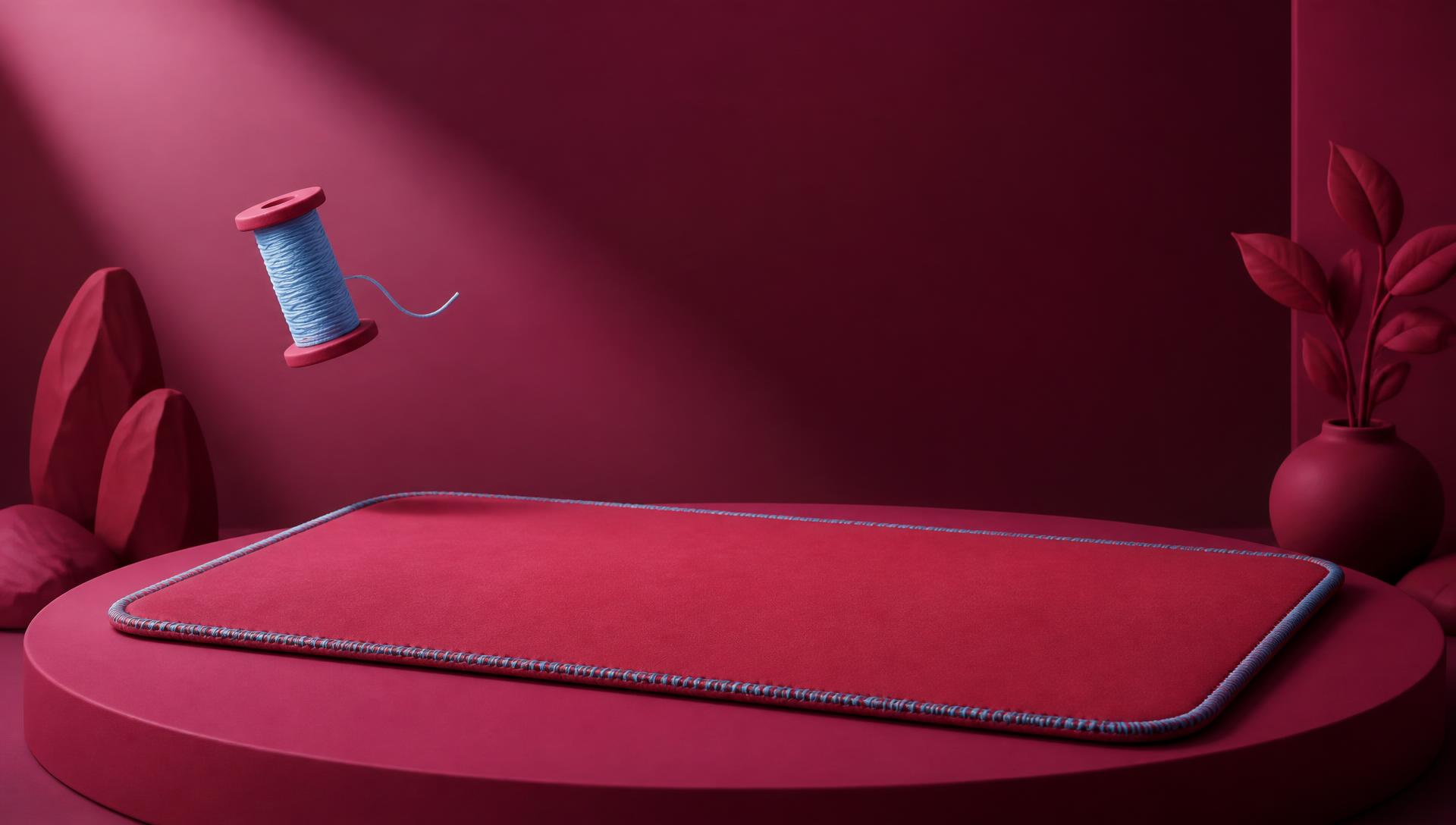
An artisan mousepad is a premium, small-batch-mindset pad built around better materials and tighter manufacturing tolerances than a mass-market pad — thicker rubber base, tuned cloth surface, and finished edges — rather than a specific brand name. This guide explains what actually separates artisan-tier pads from mass-market ones, where custom-printed pads fit in, and whether the upgrade is worth it for your setup.
"Artisan" in the mousepad world is a category description, borrowed from the mechanical keyboard scene's artisan keycaps, not a certification. No official body defines it, so treat any specific brand's "artisan" claim as marketing language and judge the actual spec sheet instead.
What is an artisan mousepad, really
At its core, the artisan tier is about deliberate tuning at every layer of the pad instead of using whatever's cheapest at each step. That shows up in four places:
Material tiers
Mass-market pads typically use a thin (2-3mm) foam or low-density rubber base and a basic printed or dyed cloth top. Artisan-tier pads use denser natural or synthetic rubber (commonly 4mm+) that resists curling and compression over years of use, plus a woven cloth top chosen for a specific glide-vs-control feel rather than just print compatibility.
Surface tuning
This is the biggest functional difference. A mass-market cloth surface is optimized to look good in a photo. An artisan-tuned surface is optimized for a specific sensor feel — faster glide for flick-heavy play, or higher friction (control) for tracking precision — and that tuning comes from thread weave, weave density, and coating choices, not from the printed image itself.
Edge work
Mass-market pads are often cut and left raw, which frays within months. Artisan and premium pads use stitched or heat-sealed edges specifically to stop fraying at the point where hands and mice contact the pad most. If you want the mechanics of why this matters, see our breakdown of stitched vs. unstitched mousepad edges.
Small-batch production
Mass-market pads are produced in huge runs optimized for unit cost, which means tolerances (base flatness, edge alignment, color consistency) are the first thing sacrificed to make the price point. Artisan-minded producers run smaller batches and check tolerances more tightly, but this is a production philosophy — it doesn't automatically mean any label using the word delivers on it. Judge the described materials and construction, not the word "artisan" itself.
Artisan-tier vs. mass-market vs. custom-printed
| Factor | Mass-market pad | Custom-printed pad | Artisan-tier expectation |
|---|---|---|---|
| Base thickness | 2-3mm foam | Usually 3-4mm rubber | 4mm+ dense rubber |
| Edges | Raw-cut, frays fast | Often stitched | Stitched or sealed as standard |
| Surface tuning | Generic, print-first | Print-first, some control over finish | Tuned for glide or control intentionally |
| Print method | Screen print (fades) | Dye-sublimation (into fibers) | Dye-sublimation or better, matched to weave |
| Design | Fixed catalog designs | Fully custom via AI or upload | Custom or curated, tolerance-checked |
| Base flatness | Inconsistent, curls | Depends on manufacturer | Tightly toleranced, stays flat |
| Typical lifespan | 6-18 months | 2-4 years with care | 3-5+ years with care |
For a full spec-by-spec look at how a properly made custom pad compares to premade options, read our custom mousepad vs. premade comparison.
Is an artisan mousepad worth it
If you use a mouse for hours daily — gaming, design work, or general desk use — the base durability and edge finishing pay for themselves over a few years, since you're not replacing a curling, fraying pad every six months. If you use a mouse occasionally or already have a pad that performs fine, the upgrade is mostly about surface feel and desk aesthetics rather than a functional necessity.
Where the money actually goes
Thicker, denser rubber costs more per unit than thin foam. Stitched edges require an extra manufacturing step most cheap pads skip entirely. Tighter tolerance checking means more units get rejected before shipping, which raises the cost of the units that do ship. None of this is about a brand premium — it's material and labor cost that shows up directly in how the pad performs after a year of daily use.
Questions to ask before paying artisan-tier pricing
Ask for the actual base thickness in mm, not just "premium rubber." Ask whether edges are stitched, sealed, or raw. Ask what print method is used — dye-sublimation should be standard at this price point, and screen printing at artisan pricing is a red flag. If a listing can't answer these plainly, treat the "artisan" label as unverified.
How a custom design fits an artisan-minded setup
The artisan tier is about construction quality, but a fully custom design is what makes the pad feel personal rather than just well-made. Pairing dense-rubber, stitched-edge construction with an AI-generated design built specifically for your setup's palette gets you both: material quality plus a piece nobody else owns. That's the model behind CursorCulture pads — 4mm base, stitched edges, dye-sublimation printing, with the artwork generated in the studio around whatever character, palette, or scene you actually want, instead of picking from a fixed catalog.
If you're deciding what to design, our guide on designing a custom deskmat walks through composition and palette choices that hold up well at artisan-tier print quality.
Sizing considerations at this tier
Artisan-tier construction matters more the larger the pad gets, since a poorly toleranced base is far more visible (and more prone to curling at the edges) across an XXL or XXXL surface than a small mouse-only pad. Check our XL/XXL/XXXL size guide if you're sizing up and want the base quality to hold across the full surface.
FAQ
What makes a mousepad "artisan" instead of just expensive?
It's the combination of denser rubber base, tuned cloth surface, finished edges, and tighter production tolerances — not the price tag alone. A pad can be expensive without any of these; always check the actual spec, not the label.
Is artisan mousepad a real industry term or just marketing?
It's a borrowed term (from artisan keycaps) with no formal certification body. Use it as a category description and verify the underlying materials and construction yourself rather than trusting the word on its own.
How is an artisan mousepad different from a custom-printed one?
Custom-printed describes the design process (your own image or AI-generated art), while artisan-tier describes the construction quality (base density, edges, tuning). A pad can be both — custom design on artisan-grade construction — which is the strongest combination for durability and personalization.
Do artisan mousepads actually improve gaming performance?
Surface tuning can affect glide and control feel, which matters for sensitivity-sensitive genres, but the gain is about consistency and comfort over time rather than a dramatic skill boost. Base durability (staying flat, not fraying) matters more for long-term performance consistency than any marginal glide difference.
What's a reasonable price range to expect for artisan-tier quality?
Pricing varies by size and printing method, so check current options on our pricing page rather than relying on category averages, which shift often and vary a lot between materials and sizes.
Do I need to reapply or maintain an artisan pad differently than a regular one?
Care is mostly the same across tiers — avoid folding, use mild soap and water rather than harsh chemicals, and let it air dry flat. Our deskmat care guide covers the specifics that apply regardless of tier.
If you want artisan-level construction with a design built specifically around your favorite series or palette, start in the studio — describe what you want and get a 4mm, stitched-edge pad made to match your desk instead of a generic catalog print.
Keep going
Like this? Get the next one in your inbox.
New journal posts, prompt packs, and artist drops. No spam, ever.