
Anime Mousepad vs Regular Mousepad: Real Diff
April 28, 2026
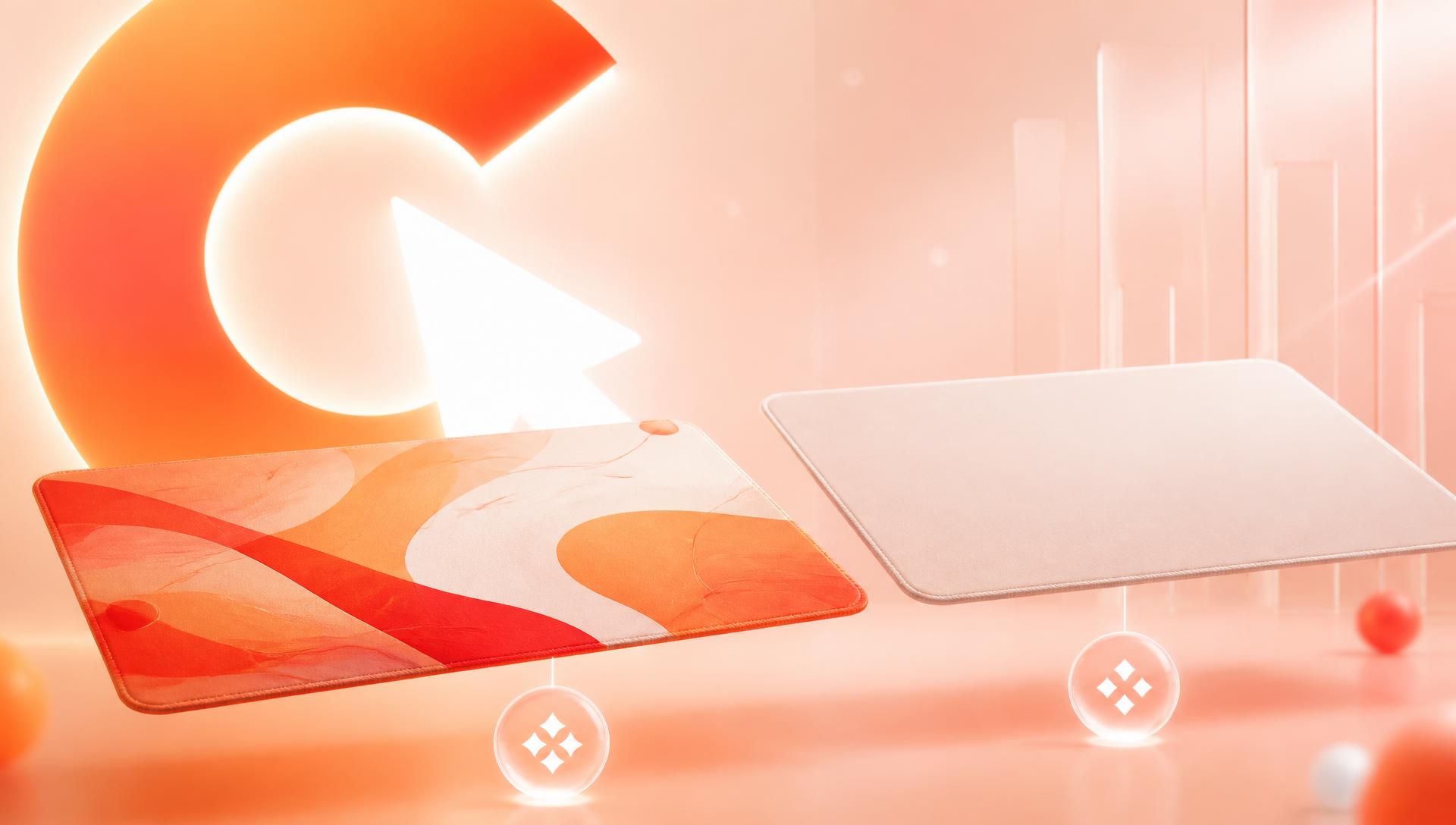
An anime mousepad and a regular mousepad can feel identical under your hand — the print itself doesn't slow your glide or confuse your sensor when it's done properly. The real differences are in construction: how the ink is applied, how thick the pad is, whether the edges are stitched, and how big it is. Those choices are what separate a pad that lasts years from one that curls and fades in a season.
This article breaks down anime mousepad vs regular mousepad by mechanism, not marketing — what print actually does to glide, tracking, durability, and value, plus a straight comparison table so you can see where the real gaps are.
The print itself isn't the differentiator — the print method is
A "regular" mousepad usually ships with no print, or a small screen-printed logo in one corner. An anime mousepad is typically printed edge-to-edge. But two pads can both be "printed" and behave completely differently depending on how:
- Dye-sublimation gas-bonds ink into the cloth fibers. The dye becomes part of the fabric, so the surface texture is unchanged and there's nothing sitting on top to wear off, peel, or feel tacky.
- Heat transfer or inkjet-on-top methods lay ink on the surface of the cloth. This is cheaper to produce and it's why some budget "anime" pads feel slightly rough or sticky specifically in the printed areas, and why the colors dull faster.
If a printed pad glides differently over the art than over blank cloth, that's a sign the ink is sitting on the surface rather than bonded into it — a heat-transfer or inkjet job, not real sublimation.
Does printing affect glide?
On a properly sublimated pad, no. The dye is inside the weave, not on top of it, so the surface micro-texture that actually determines glide — the weave pattern, the fiber finish — is unchanged by having a design on it. A busy, colorful anime print and a blank pad made from the same cloth glide identically.
Where glide does change is thickness and base material, which is a construction choice independent of whether the pad has art on it. A 4mm cushioned pad has a slightly different feel under the wrist than a 2mm hard-backed one, but that has nothing to do with the print — you'd get the same feel difference between two blank pads of different thickness.
Does a busy printed pattern mess with sensor tracking?
This is the most common worry, and it's based on a real mechanism but an outdated risk. Optical and laser mouse sensors track by detecting frame-to-frame changes in surface micro-texture and contrast at a very fine scale — not by "reading" the image the way your eye does. Modern sensors sample far below the resolution of the printed artwork, so a detailed anime scene and a flat gray pad look effectively the same to the sensor: a textured surface with consistent micro-contrast.
The scenario where tracking problems can occur is unrelated to the art itself: an extremely glossy, low-texture print finish, or a surface print sitting proud of the fabric weave (again, the heat-transfer/inkjet problem) that changes the physical surface the sensor reads. A well-executed sublimation print doesn't alter the weave at all, so tracking performance matches a blank pad of the same base cloth.
Ink saturation and surface feel
Because sublimation dye becomes part of the fiber rather than coating it, a heavily saturated, detail-dense anime print feels no different to the touch than a plain-colored pad off the same production line. What you should actually feel for when judging quality is:
- No stiffness or rigidity localized to printed areas.
- No tackiness or slight drag specifically where ink is heaviest.
- Consistent texture whether you run a finger over a printed zone or blank space.
Any of those signs point to a lower-quality print method regardless of how good the art looks in photos.
Durability: print vs plain pad
A sublimated print is as durable as the cloth itself, because it is part of the cloth — it doesn't peel, crack, or rub off with normal cleaning. This means a well-made printed pad and a well-made blank pad degrade at roughly the same rate, and for the same reasons: the cloth weave eventually flattens in the high-use zone, and the rubber base is what eventually loses grip.
A poorly printed pad fails differently and faster — heat-transfer layers crack and peel at the edges, colors visibly dull after repeated washing, and the print surface can feel different from the rest of the pad within weeks. See our full care routine for keeping a sublimated print looking correct for years, and how to wash a mousepad properly without damaging either the print or a plain pad.
Comparison table
| Factor | Regular mousepad | Anime mousepad (quality build) |
|---|---|---|
| Print method | None, or small screen-printed logo | Edge-to-edge dye-sublimation |
| Glide | Depends on cloth/base, unaffected by lack of print | Identical glide to blank cloth when properly sublimated |
| Sensor tracking | Unaffected by design (there isn't one) | Unaffected by design — sensors read micro-texture, not the image |
| Thickness | Often 2-3mm, hard-backed | Commonly 4mm, cushioned |
| Edge finish | Often raw-cut, frays over time | Stitched edges lock cloth and rubber together |
| Typical size | 250×210mm, mouse-only | 800×300mm and larger, covers keyboard and mouse |
| Durability of print | N/A | Bonded into fiber, doesn't peel or rub off when sublimated |
| Personalization | None | Fully custom — your own character, palette, composition |
| Aesthetic/resale value | Purely functional | Desk-setup centerpiece, frequently shown in setup photos |
Size is where the categories diverge most
A standard office or budget gaming mousepad is small — roughly 250×210mm, just enough room for mouse movement. Most anime mousepads are sold as full deskmats: XL, XXL, or XXXL, covering your keyboard, mouse, and often a coaster's worth of extra desk. That size difference alone changes how the pad functions on your desk, independent of the art — see the XL/XXL/XXXL size guide for which dimensions fit which setups.
Aesthetic and "resale" value
A plain pad is disposable — nobody photographs it, nobody misses it when it's swapped out. A well-made anime deskmat functions as a visible part of your desk setup, which is why they show up constantly in setup photos and streams. That's a real value difference even though it's not a performance one: for a lot of buyers, the desk mat is doing double duty as decor and as hardware.
Are anime mousepads good for gaming?
Yes, provided the build quality is there. Competitive players care about consistent glide and accurate tracking, and neither is compromised by a sublimated print — the things that actually affect competitive performance are surface texture, base grip, and size relative to your sensitivity, all of which are construction choices, not art choices. See our gaming mousepad guide for how surface and size choices affect play specifically.
Related reading
FAQ
Does the print on an anime mousepad slow down mouse glide?
No, not when it's dye-sublimated. The ink bonds into the cloth fiber rather than sitting on the surface, so the micro-texture your mouse glides over is unchanged by having artwork on it.
Can a busy anime print confuse my mouse sensor?
No. Optical and laser sensors track fine surface texture and contrast at a scale far below what the printed image shows — they don't "see" the artwork. Tracking issues come from surface finish problems, not image content.
Are anime mousepads as durable as plain mousepads?
When properly sublimated, yes — the print is part of the fabric and wears at the same rate as the cloth itself. Cheaper heat-transfer or inkjet prints are less durable and can peel or fade faster than an unprinted pad.
Is a thicker anime deskmat actually better, or just marketing?
Thickness (commonly 4mm on quality deskmats vs 2mm on budget pads) genuinely affects wrist comfort and vibration dampening. It's a real, feelable difference, independent of whatever art is printed on top.
Why do some cheap anime pads feel sticky over the printed areas?
That's usually a heat-transfer or inkjet print sitting on top of the fabric rather than bonded into it. The ink layer can trap oils and moisture differently than the surrounding cloth, which creates that tacky feel.
Is it worth paying more for an anime mousepad over a plain one?
If you only need a flat mousing surface, no — a basic pad does that job. If you want a large desk surface with lasting personalized art, the extra cost buys real construction differences: sublimation, stitching, and thickness, not just a picture.
Want a pad that gets the construction right and the art exactly how you want it? Build your own in the studio and check sizing and options on the pricing page.
Keep going
Like this? Get the next one in your inbox.
New journal posts, prompt packs, and artist drops. No spam, ever.