
How to Flatten a New Mousepad (Safely)
August 12, 2026
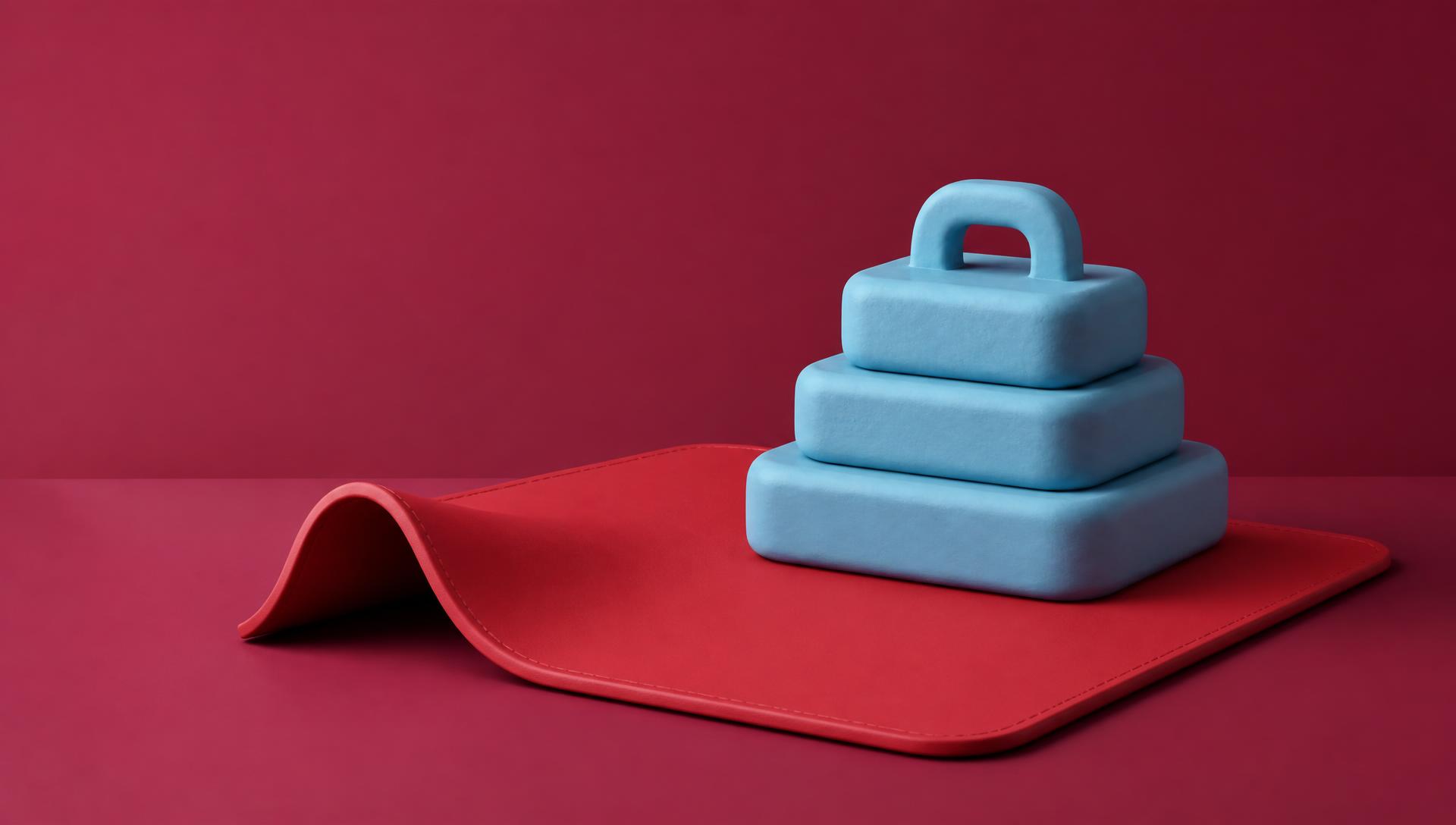
A new mousepad curls because it's shipped rolled and the cloth-rubber laminate holds that shape temporarily — it's not a defect, and it almost always flattens with a day or two of reverse-curl and weighted rest. Don't iron it, don't blast it with a hair dryer, and don't soak it in hot water; those methods risk warping the rubber base or damaging the printed surface.
Why shipping rolls cause curl
Mousepads are shipped rolled rather than flat because rolling is far more space- and cost-efficient for shipping a large, thin, flexible object. The pad's construction — a printed cloth top bonded to a rubber base — means both layers get bent around the same radius during shipping, and the rubber base in particular has some "memory": it resists returning instantly to flat because the bend has been held, sometimes for days, under the pressure of other items in a shipping box. This is completely normal and not a sign of a bad batch or thin materials; even premium 4mm stitched-edge pads ship this way because it's the only practical shipping method for something this size.
How long it takes
Most curl relaxes significantly within 24-48 hours of being unrolled and laid flat under light weight, and fully within about a week for pads that shipped with a tighter curl (common with XXL and XXXL sizes, since a longer pad has to curl to a smaller relative radius to fit standard shipping tubes). Don't judge flatness in the first hour out of the box — give it a proper rest period before deciding whether it needs more aggressive treatment.
Safe flattening methods
Reverse-roll
The single most effective method: roll the pad in the opposite direction of its shipping curl, gently, and hold it there (a rubber band or two loosely around the roll works) for a few hours to overnight. This counters the "memory" in the rubber base by asking it to relax in the other direction, and it's much faster than just laying it flat and waiting.
Weighted flat rest
Lay the pad flat, print-side up, on a hard surface, and place evenly distributed flat weights across it — books work well as long as they're spread out rather than stacked in one spot, which can create a new localized crease. Leave it for 24-48 hours. This is the safest all-purpose method and works well combined with reverse-rolling first.
Low ambient warmth
Mild, ambient warmth — like leaving the pad flat in a normally warm room, or briefly in a car on a warm (not hot) day, or near but not on a heat source — can help the rubber base relax faster, since rubber becomes slightly more pliable at higher temperatures. Keep it well short of anything that would feel hot to the touch; this is about ambient room temperature, not applied heat. Combine with the weighted-flat method for best results.
What to never do
- Never iron it. Direct heat at iron temperatures can melt or distort the rubber base and can scorch or discolor the dye-sublimated print, which is permanent damage, not a fix.
- Never use a hair dryer on high heat. Concentrated hot air can warp the rubber base unevenly, causing a permanent ripple that's worse than the original curl.
- Never soak it in hot water. Hot water can affect the adhesive bond between the printed cloth layer and the rubber base, and it risks color bleeding or texture changes in the print that cold-water cleaning wouldn't cause — see our cleaning guide for the actual safe way to get a pad wet.
- Never fold it. Rolling is reversible; a hard fold creates a crease at a much tighter radius than the shipping roll and is far more likely to leave a permanent mark.
Timeline expectations
| Method | Time to noticeable improvement | Time to fully flat |
|---|---|---|
| Reverse-roll alone | A few hours | Overnight to 1-2 days |
| Weighted flat rest alone | 24 hours | 2-4 days |
| Reverse-roll + weighted rest | Several hours | 1-2 days |
| Reverse-roll + weighted rest + ambient warmth | A few hours | 1 day |
Larger pads (XXL, XXXL) generally sit at the higher end of these ranges simply because there's more material holding the curl.
Permanent creases and when they indicate a defect
A soft curl from shipping is expected and temporary. A hard, sharp crease line — especially one that doesn't relax at all after several days of proper flattening — is different, and usually means the pad was folded rather than rolled at some point, either in packing or in transit. Signs a crease may be a genuine defect rather than normal shipping curl:
- A sharp, narrow line rather than a broad, gentle curve.
- No improvement at all after 3-4 days of weighted flat rest.
- Visible texture change or slight print distortion right at the crease line.
- The mark appears in a random spot rather than at the natural ends of a roll.
If you see these signs, it's reasonable to contact support about a replacement rather than continuing to try flattening methods indefinitely — a true fold-crease in the rubber base is unlikely to fully resolve on its own the way a roll-curl does.
How storage prevents recurrence
Once flat, a pad's shape holds well under normal desk use because it's resting under its own weight across a large flat surface most of the time. Curl typically only comes back if the pad is rolled or folded again for storage or travel. If you need to store or transport a pad:
- Roll it loosely rather than tightly, using the largest diameter roll you reasonably can.
- Roll it print-side out, matching the direction the manufacturer originally shipped it, rather than the opposite way, since reversing the curl direction repeatedly stresses the rubber base more than consistent rolling does.
- Avoid folding entirely, even temporarily — a fold held for even a short time can start to set.
- If leaving a pad rolled for an extended period (long storage), consider periodically unrolling and laying it flat rather than leaving it rolled for months.
For a pad that lives on your desk permanently, this is rarely an issue — see our anime deskmat care guide for the broader maintenance picture beyond just flatness.
A note on XXL and XXXL pads specifically
Larger pads are shipped with a tighter relative curl because they have to fit the same shipping tube diameter as smaller pads despite having far more material. If you ordered an XXXL and the curl looks more dramatic than you expected out of the box, that's normal for the size — not a sign of a lower-quality build. Give these larger sizes the longer end of the flattening timeline before judging the result, and use two people if you need to reverse-roll one, since the length makes it awkward to manage alone.
FAQ
Why won't my new mousepad lay flat?
It shipped rolled, and the rubber base holds some of that curl temporarily. This is normal, not a defect, and it resolves with a day or two of reverse-rolling and weighted flat rest.
How do I remove curled edges from a deskmat?
Reverse-roll it gently in the opposite direction for a few hours, then lay it flat under evenly distributed weight for 24-48 hours. Combining both methods works faster than either alone.
Can I iron my mousepad to flatten it?
No. Iron-level heat can melt or distort the rubber base and damage the printed surface permanently. Use reverse-rolling and weighted rest instead.
Is it safe to use a hair dryer to flatten a mousepad?
Avoid high heat settings — concentrated hot air can warp the rubber base unevenly and create a worse, permanent ripple. Mild ambient warmth (a warm room) combined with weighted flattening is safer.
How long does it take for a rolled mousepad to flatten out?
Most pads flatten noticeably within 24-48 hours and fully within about a week, depending on size and how tightly they were rolled for shipping. XXL and XXXL pads tend to take longer.
How do I know if a crease is permanent damage rather than normal curl?
A sharp, narrow crease line that shows no improvement after 3-4 days of proper flattening, or visible print distortion at the line, suggests a fold rather than a shipping roll — that's worth contacting support about.
How do I store a mousepad without it curling again?
Roll it loosely at the largest diameter you can manage, in the same direction it originally shipped, and avoid folding it. For a pad that stays on your desk, this generally isn't an issue at all.
Once your pad is sitting perfectly flat, it's worth building your next one right from the start — design a custom pad in the studio and check pricing for the size and thickness that fits your desk.
Keep going
Like this? Get the next one in your inbox.
New journal posts, prompt packs, and artist drops. No spam, ever.